ServicesTile Roofing
Tile Roofing in Carefree
On a tile roof, the tile itself usually outlasts the layer beneath it. That underlayment is what we replace, along with re-laying sound tile, swapping cracked pieces and installing new concrete or clay tile roofs. You see the full scope in writing before anyone climbs a ladder.
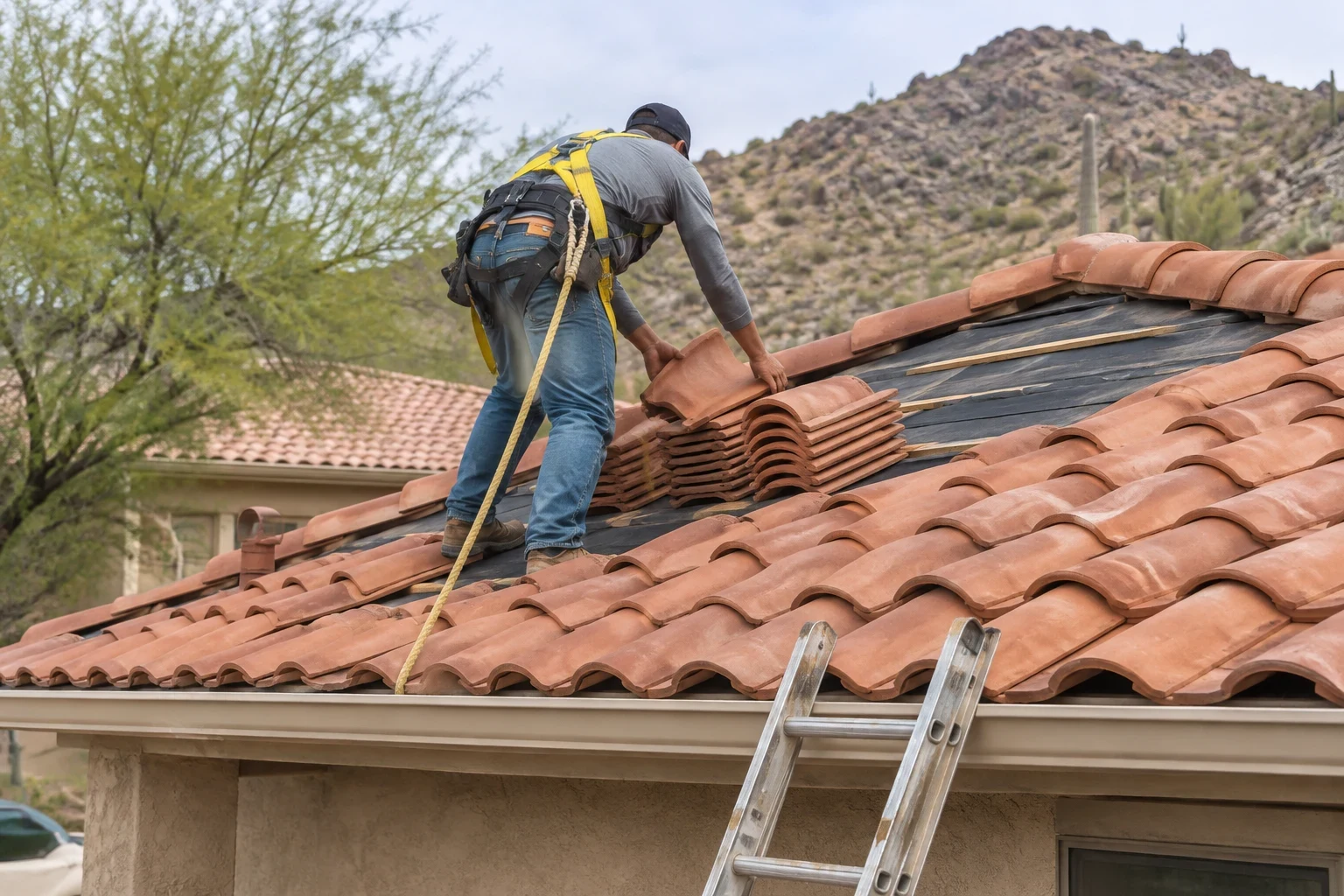
What tile roofing work actually involves
Concrete and clay tile can last 50 years or more. The felt or synthetic underlayment under it usually gives out much sooner, often around the 20 to 25 year mark, because constant heat dries it until it cracks and stops shedding water. Your tile then works as a sunshade and a first line of defense. The underlayment is what actually keeps water out of your home.
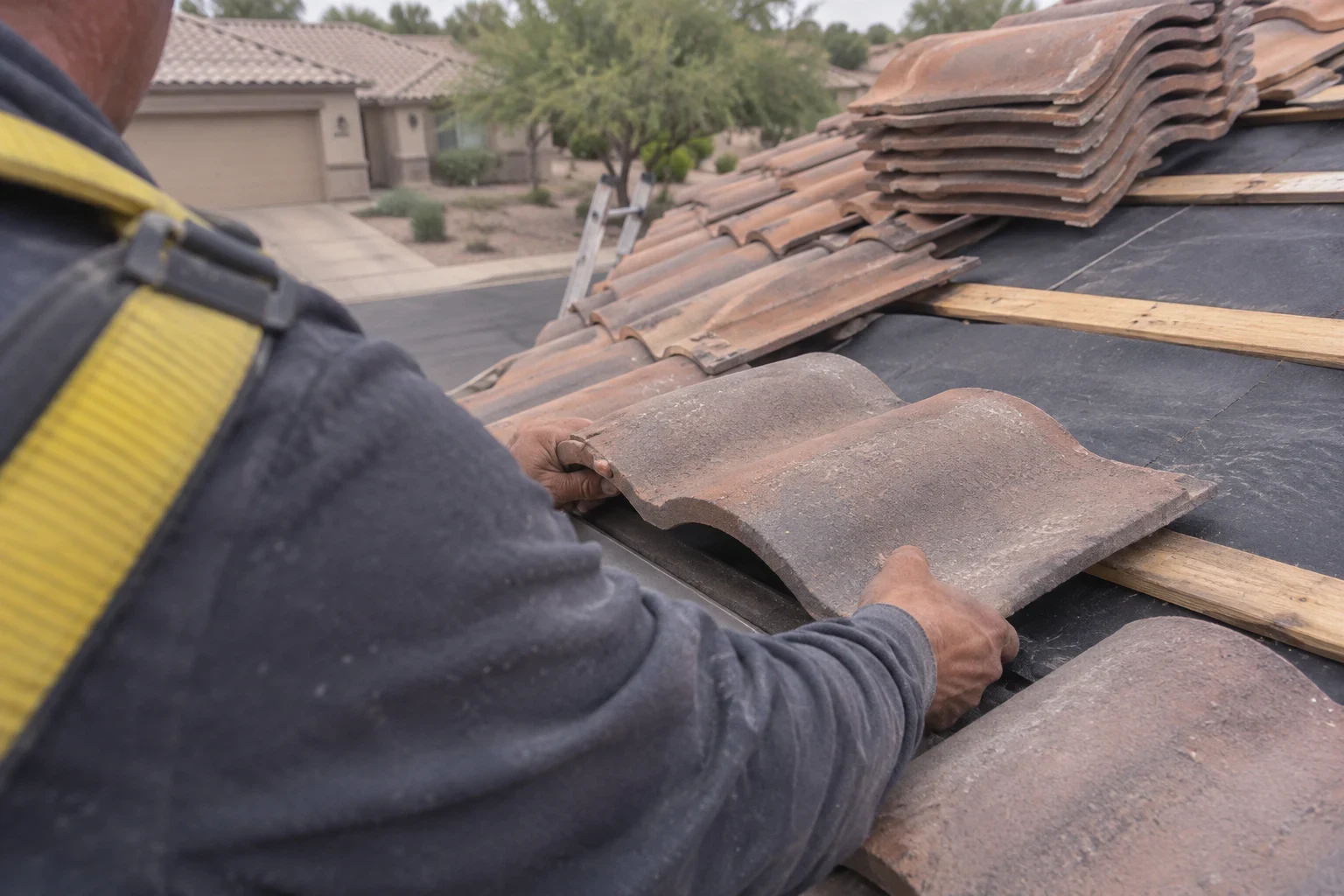
That is why the right job is often a lift-and-relay, not a whole new roof. We pull the tile, stack the good pieces, replace the underlayment and flashings, then set the same tile back down. When tile is discontinued, badly broken or the roof needs a different weight, a full new tile installation makes more sense.
Before work starts, we put in writing which of those jobs your roof needs and why. You also see each item that affects the price.
What's included in our tile roof work
- Tile removal and staging
- We lift tile by hand and stack it on the roof or on the ground, protected from foot traffic. Cracked or brittle pieces are counted and set aside so the replacement count goes on your quote.
- New underlayment
- We install new underlayment over the deck, typically a two-layer system or a high-temperature synthetic rated for tile. Laps run in the right direction so water that gets past the tile drains down and out at the eave.
- Battens and eave closure
- Where the roof uses battens, we replace rotted or warped strips. We also install bird stop or eave closure so the first course sits at the correct angle and pests can't nest under it.
- Flashing replacement
- Valley metal, headwall and sidewall flashing, and pipe flashings get replaced instead of reused when they are rusted, bent or sealed with old mastic. Most tile roof leaks start at these transitions.
- Tile resetting and fastening
- Tile goes back down with the fasteners and spacing the tile and slope call for, and ridge and hip pieces are reset in mortar or on a ridge system. Matching replacement tile fills gaps where originals were lost.
- Cleanup
- We sweep broken tile chips, nails and old felt off the roof, out of the landscaping and off the driveway before we leave.
Signs your tile roof needs attention
Ceiling stains with no visible broken tile
Water is getting past intact tile and through tired underlayment. The stain often shows up away from the actual entry point because water travels along the deck before it drips.
Cracked or slipped tiles
Tiles crack from foot traffic, falling branches or fasteners that have corroded. A slipped tile exposes underlayment to direct sun, which speeds up its breakdown.
Dark, brittle felt at the eaves
Check the underlayment showing along the bottom edge. If it is dark and crumbles under a fingertip, expect the felt across every slope to be just as worn, since it has taken the same years of heat.
Leaks after the first monsoon storms
Wind-driven summer rain finds weak valleys and flashings fast. A roof that stays dry in light winter rain but leaks in a heavy storm usually has a flashing or underlayment problem.
Roof age past 20 years
Even with no leak yet, a tile roof this old with original underlayment is worth pricing out before damage reaches the deck.
What affects the cost of tile roofing
Tile roof pricing depends far more on what's under the tile and how the roof is shaped than on the tile itself. We list each of these factors on your written quote, so a change in scope has a reason you can read.
Re-lay or new tile
Reusing your existing tile saves on material. New tile, or switching between clay and concrete, adds material and sometimes structural considerations because of weight.
Roof size and complexity
More hips, valleys and wall transitions mean more flashing and more cut tile. A simple gable costs less per square than a roof with several levels.
Breakage and tile matching
Older tile breaks during handling. Discontinued profiles or colors can take longer to source and may cost more per piece.
Deck condition
Rotted sheathing found after tear-off has to be replaced. We note the per-sheet cost in writing beforehand so there is no guesswork if it turns up.
Underlayment choice
A two-layer system or premium synthetic costs more upfront than a single layer and is built to last longer under tile.
How a tile roof job runs
- 1
We walk the roof and write the scope
We check tile condition, lift a few pieces to see the underlayment, and look at valleys and flashings. Then we write out the recommended work, the tile replacement count and what could change the price.
- 2
Permit and materials
We pull the permit where the job requires one and order underlayment, flashing and any matching tile. If matching tile is hard to find, we tell you before the job is scheduled.
- 3
Tear-off and dry-in
Crews remove tile and old underlayment one section at a time and dry the deck in the same day, so your home is never left open overnight.
- 4
Relay and finish
Tile is reset, ridges are finished and flashings sealed. We clean up and walk you through what was done, including any deck repairs we found and noted along the way.
Tile roofing questions
Do I need a whole new roof if my tile roof leaks?
Usually not. Most leaks come from worn underlayment or failed flashing, and the tile can go back on after those are replaced. We'll tell you plainly if your tile is too damaged or discontinued to reuse.
How long does a tile underlayment replacement take?
An average home typically takes several working days, depending on size, pitch and how much tile needs replacing. We give you an expected schedule with the written quote.
Can you match my existing tile?
Often, yes, either with new tile in the same profile or with salvaged pieces. If an exact match isn't available, we can use replacement tile on less visible slopes and keep your originals on the street side.
Should I choose clay or concrete tile?
Each one has a case. Clay keeps its original color for decades, and some clay profiles weigh less. Concrete is the lower-cost option and comes in a wider range of shapes. Both stand up to desert sun, and the underlayment beneath either one decides more about how long the roof stays dry.
Should I walk on my tile roof to check it?
We'd advise against it. Tile cracks easily under foot if you step in the wrong spot, and a cracked tile you can't see becomes a future leak.
Find out what your tile roof really needs
Give us the rough age of the roof and what you've noticed, such as a ceiling stain, a cracked tile or a drip after a heavy storm. We'll schedule a visit, then write out the scope and every pricing factor before any work begins.