ServicesFoam Roofing
Foam Roofing in Carefree, AZ
We spray new polyurethane foam roofs and recoat aging ones on flat and low-slope homes. Before work starts, you get a written quote listing foam thickness, coating type, prep steps and how we handle wet areas. If something changes the job, we show you and agree on it first.
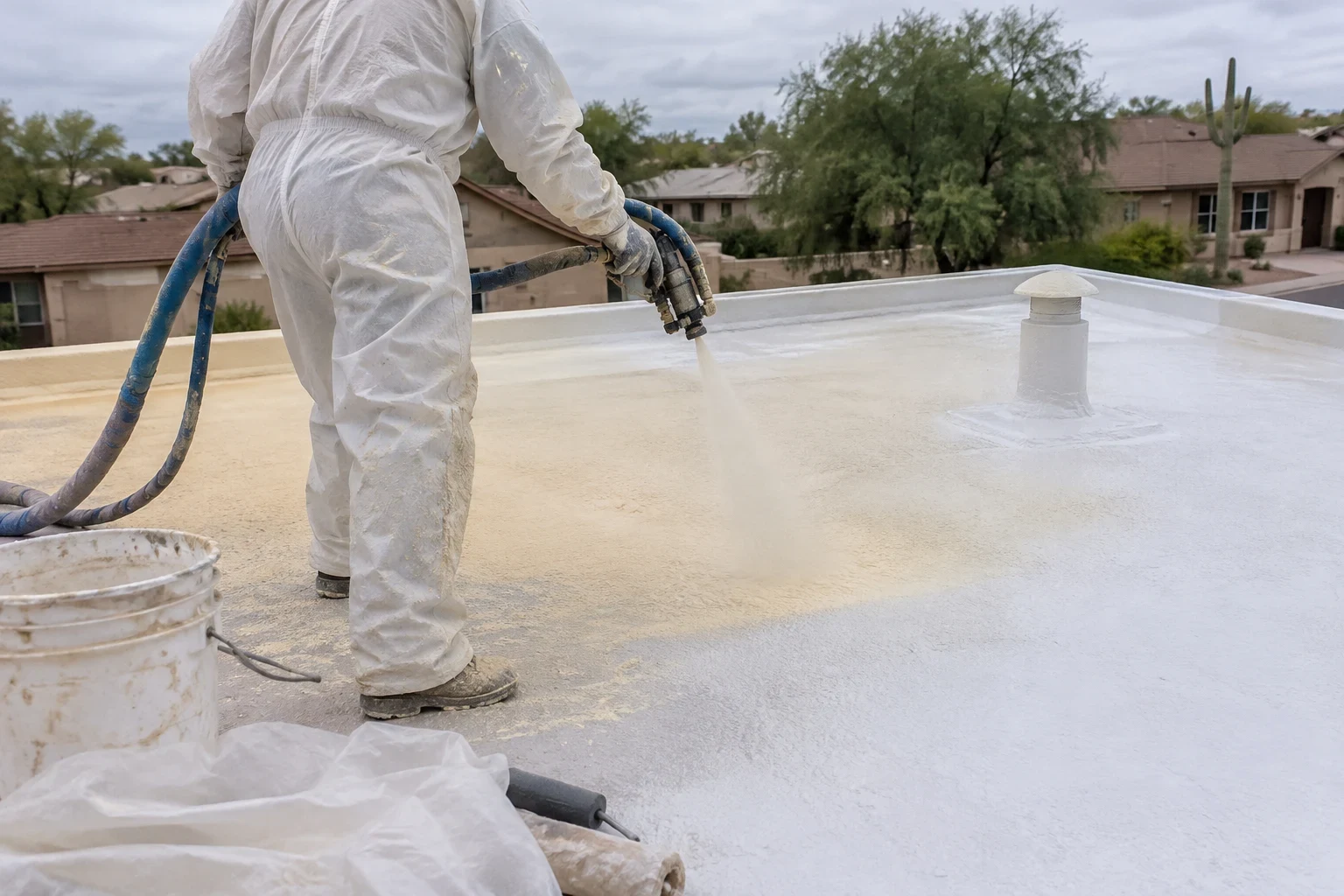
How spray foam works on a flat roof
Spray polyurethane foam begins as two liquid components that meet and mix at the gun. On contact they react, swell to many times their volume and harden into a rigid, closed-cell layer that grips the deck or existing roof underneath. The result is one continuous membrane with no laps or seams for water to work into. We can also build it up thicker in low areas to steer water toward the scuppers.
Foam has one weakness: sunlight. Exposed foam breaks down under UV, so every foam roof depends on an elastomeric coating, usually acrylic or silicone, to shield it. Most foam roof problems we see come from coating that wore thin and was never renewed.
Foam suits the flat roofs tucked behind parapet walls on many desert homes around Carefree and Cave Creek, where heat load and ponding are the main concerns. For pitched roofs, our tile roofing and shingle roofing pages cover better options.
What our foam roofing work includes
New foam roof systems
We spray closed-cell foam over a prepared deck or a sound existing roof. It is built to the thickness listed in your written scope, with added taper wherever water has been standing.
Recoating existing foam
When the foam is still dry and solid, a fresh coating is often all it needs. We clean the surface, repair small damage and apply coating to the specified thickness, measured in mils.
Wet foam and blister repair
We probe suspect areas for moisture, cut out foam that has taken on water and fill the cavity with new foam before coating. Wet foam left in place keeps spreading under the coating.
Parapets, penetrations and scuppers
Foam is sprayed up the inside of parapet walls and around AC curbs, vent pipes and skylights. These common leak points end up sealed into the same membrane as the rest of the roof.
Granules where you walk
Around rooftop units and access points we can broadcast granules into the wet coating. It gives service techs a tougher surface to stand on.
Masking and cleanup
We mask stucco, windows and vehicles against overspray, and we leave the yard clear of foam trimmings and coating containers.
Signs your foam roof needs attention
- Brown or powdery foam showing
- Where the coating has worn through, foam turns tan, then brown, then crumbly. That is UV damage, and it is easier and cheaper to stop early with a recoat.
- Blisters or soft spots
- A bubble that gives underfoot usually means moisture or a bond failure beneath the coating. It needs to be opened and checked, not painted over.
- Water standing after rain
- Ponding that lingers for days speeds up coating wear. Added foam can rebuild the slope toward the drains.
- Bird pecks and small holes
- Birds pick at foam, and a small hole lets water into the cells. Each one is a minor fix if caught early.
- Cracks at parapet corners
- Movement where the roof meets the wall opens hairline cracks in the coating. It is a common entry point for leaks that show up on ceilings below.
How a foam roofing job runs
- 1
Walk the roof and write the scope
We check coating condition, probe for wet foam, measure the roof and note every penetration. You then get a written quote naming the foam thickness, the coating product and number of coats, the repair areas and anything we found that could change the job.
- 2
Prep the surface
We remove loose gravel and failing coating, cut out wet sections and clean the surface. Foam and coating will not bond well to dust or moisture.
- 3
Spray in the right conditions
Foam is sensitive to wind, dew and surface temperature, so we schedule spraying for calm, dry hours and mask the house first. Thickness is checked with a probe as we go.
- 4
Coat and finish
Coating goes on in the number of coats agreed in writing, with granules where specified. We walk you through what was done and clean up the site.
What moves the price of a foam roof
Foam pricing comes down to how much material goes on and how much prep comes first. Your quote breaks these out line by line, so you can see why a recoat and a new system cost so differently. If something hidden turns up, we show you and agree on it before doing any extra work.
- Roof size and shape
- Square footage sets the material quantity. Parapets, offsets and multiple roof levels add masking and detail time.
- Condition underneath
- Dry foam that only needs a recoat is the low end. Wet foam, rotted decking or an old built-up roof that must come off adds labor and material.
- Foam thickness and added slope
- Building taper to fix ponding uses more foam than a uniform layer.
- Coating choice
- Silicone usually costs more up front and tolerates ponding better, while acrylic is less expensive but wears faster under standing water. The choice also limits which products can go on at the next recoat.
- Rooftop equipment
- AC units, vents, skylights and solar mounts each need detail work, and some equipment may need to be lifted so we can foam underneath.
Foam roofing questions
- Can you foam over my existing roof?
- Often, yes. Foam bonds well to a sound built-up, modified bitumen or older foam roof, which avoids tear-off cost. If the old roof holds trapped moisture, that section has to come off first, and we will show you the readings behind that call.
- How do I know if I need a recoat or a new foam roof?
- If the foam is dry and firm and only the coating is worn, a recoat is usually enough. Widespread wet foam, large delaminated areas or deeply eroded foam point toward new foam. We tell you which applies and put the reasoning in writing.
- Should I choose silicone or acrylic coating?
- Silicone holds up better where water ponds and keeps its film well in strong sun, but future recoats generally need to be silicone too. Acrylic costs less and can be recoated with several products. Your quote names the product we recommend and why.
- Do I need to leave the house while you spray?
- Most homeowners stay home. Foam and some coatings give off an odor while they cure, so we ask you to keep windows closed and shut off fresh-air intakes near the roof during spraying.
- What is the lifespan of a foam roof?
- Kept under a sound coating, the foam layer can serve for decades. The coating is what wears away, and how often it needs renewing depends on the product and the thickness applied. Recoating before bare foam shows is the habit that heads off most major repairs.
- Can I walk on a foam roof?
- Yes, it handles normal foot traffic, but sharp tools, ladder feet and dropped parts can puncture the coating. Granulated walk paths near your AC units help protect the areas that get the most use.
Get your foam roof scope in writing
Tell us what you see on the roof and roughly when it was last coated. We will arrange a visit, measure and probe the surface, and put the full scope and price on paper before any spraying starts.