ServicesRoof Replacement
Roof Replacement in Carefree, AZ
When the underlayment, decking or coating under your roof has reached the end of its life, patching only buys time. We tear off to the layer that failed, rebuild it to current code and put the full scope and every pricing factor in writing before work begins.
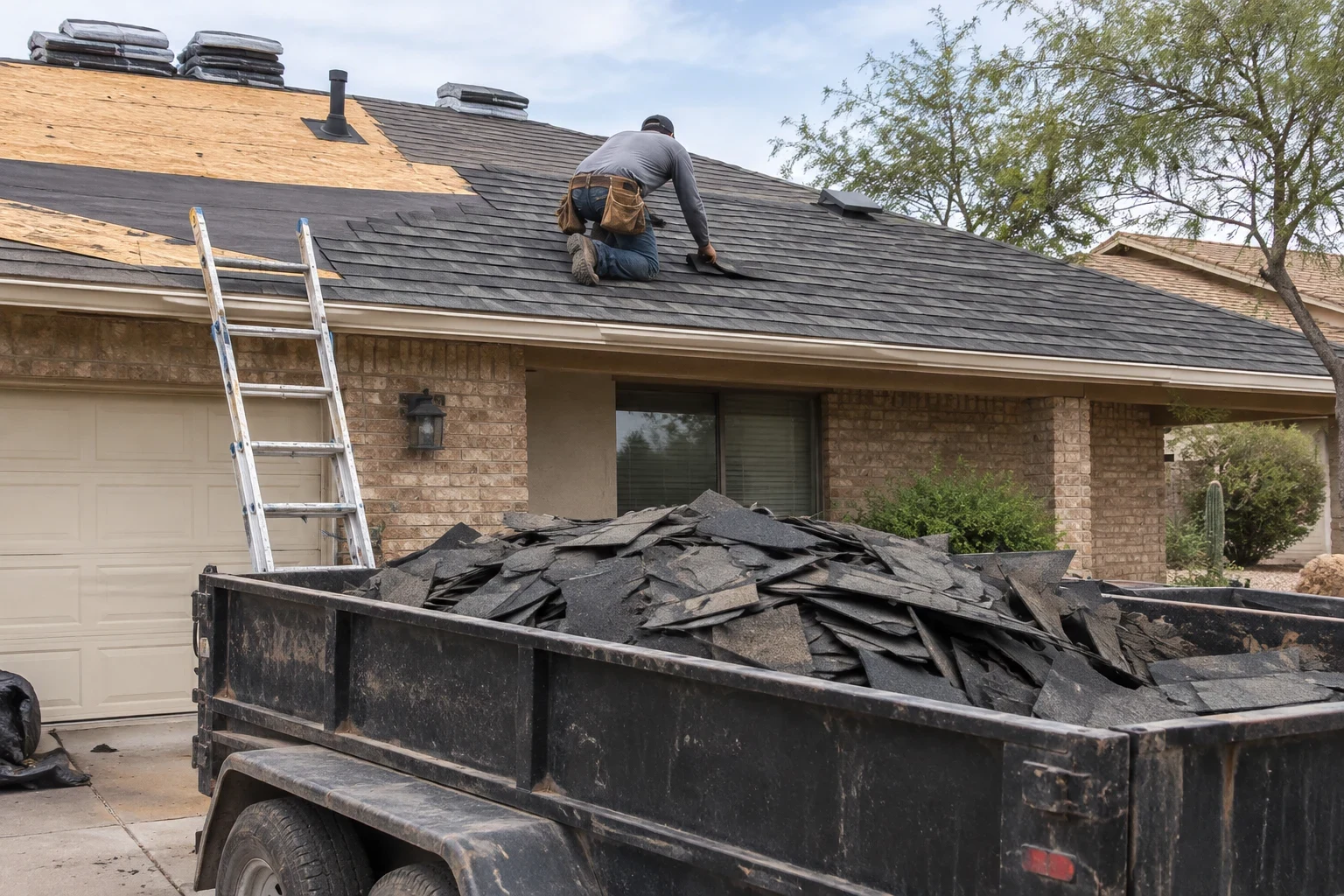
When replacement is the right call
Most roofs here do not fail at the surface first. Concrete and clay tile can outlast the house, but the felt underlayment beneath them dries out, cracks and stops shedding water after years of intense sun. Asphalt shingles lose granules and curl. Foam on a flat roof breaks down once its UV-protective coating wears through. Replacement makes sense when the failure is spread across the roof rather than at one pipe jack or one valley.
If the problem is local, we will tell you so and point you to roof repair instead. If it is not, we explain which layers need to come off, which can be reused and why, so you know exactly what you are paying for.
Before anything is scheduled, you get a written quote that lists the scope line by line: tear-off, underlayment, decking allowance, flashing, ventilation and disposal. That page is the job. If we open the roof and find rotted sheathing, the estimate already states how that is priced, so it never shows up as a surprise add-on.
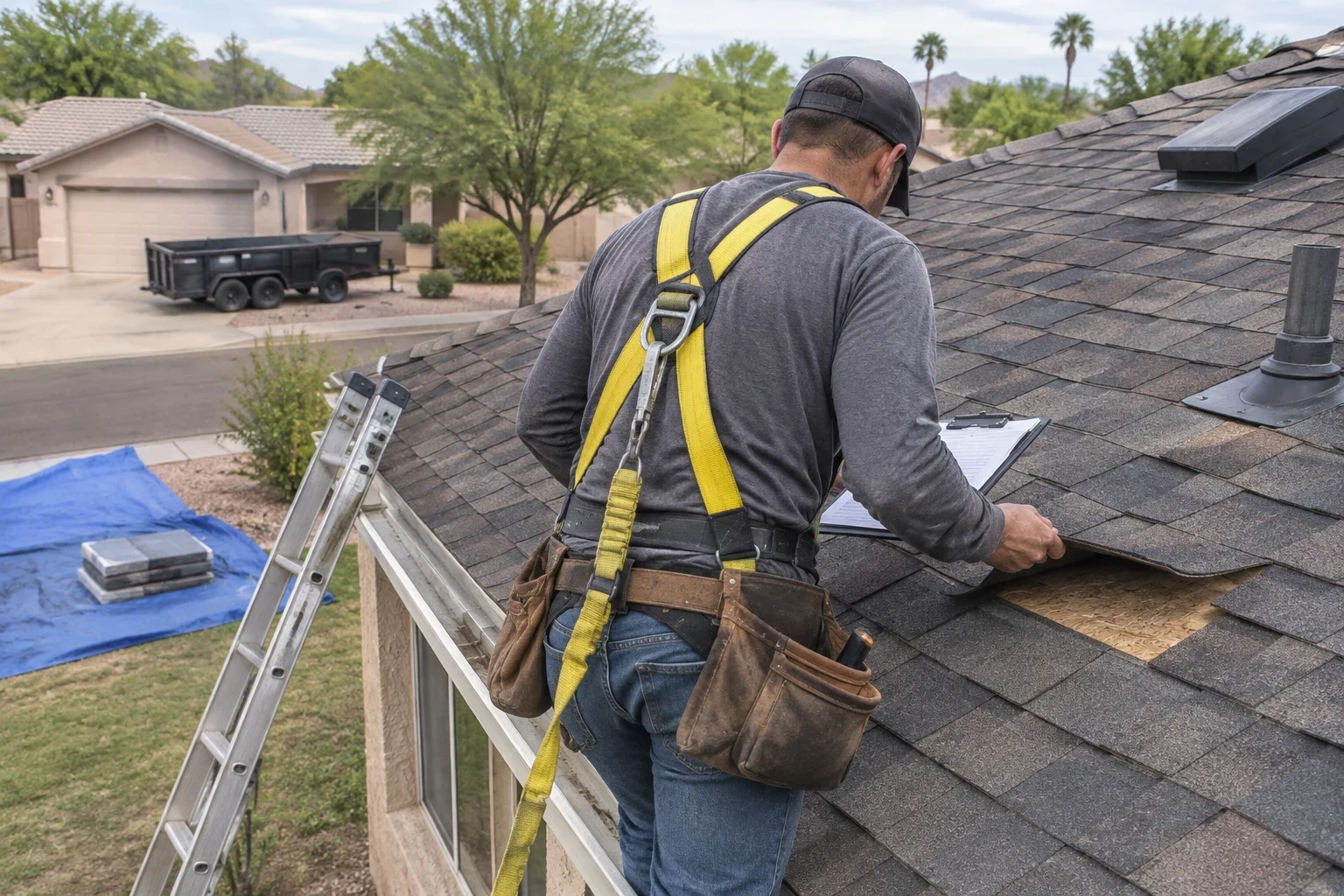
What goes into a replacement roof
- 01
Stripping to bare sheathing
Old tile or shingles, underlayment and fasteners all come off until bare sheathing shows. Roofing over old layers hides soft decking and loads the framing with dead weight, so we skip that shortcut.
- 02
Decking repair
Plywood or plank sheathing that is delaminated, soft or water-stained gets cut out and replaced with new panels nailed to the rafters. Your estimate lists the per-sheet price in advance.
- 03
Heat-rated underlayment
Under tile, we install a high-temperature underlayment in place of the old felt, which is usually the layer that caused the leak. Under shingles, we use synthetic underlayment with self-adhered membrane at valleys and penetrations.
- 04
New flashing at every penetration
Pipe jacks, roof-to-wall flashing, valley metal and skylight curbs are replaced, not reused. Sun-cracked rubber boots and corroded step flashing are among the most common leak sources we find.
- 05
Ventilation corrected
We check intake and exhaust vents and balance them where needed. Attic heat that cannot escape cooks underlayment and shingles from below and shortens the life of the new roof.
- 06
Cleanup and haul-off
Debris goes straight into a dumpster or trailer. We run a magnetic sweeper over the yard and driveway for nails, and all old material leaves with us.
Questions about Roof Replacement?
Call(480) 672-5734Signs your roof needs replacement, not another patch
Leaks in more than one spot
Stains on several ceilings, or in rooms far apart, point to underlayment failing across the roof rather than one bad flashing.
Dark, brittle felt between tiles
If you can see black, cracking felt through gaps in the tile, the underlayment has been exposed to sun and is breaking down. Resetting tiles will not fix it.
Bald or curling shingles
Shingles that have lost granules, curled at the edges or cracked across the tab no longer shield the mat from UV. Once that spreads past a few slopes, repair costs approach replacement.
Eroded or blistered foam
Foam with bare spots, pitting or open blisters is taking on water. If the foam itself is saturated, a new coating will not bond or hold.
A soft or sagging deck
A dip between rafters or a spongy feel underfoot means the sheathing has been wet for a long time.
A repair every season
If you have paid for a fix after each of the last few monsoon seasons, that money is going into a roof that is past its service life.
How a replacement job runs
- 1
We look at the roof and attic
We walk the roof, check the attic for water stains and daylight at the deck, and photograph what we find. You see the same photos we use to build your estimate.
- 2
Line-item pricing and material choice
You get a written, line-item quote covering material options, tear-off scope and the decking allowance. We go over it with you by phone so nothing is left to interpretation.
- 3
Permit and scheduling
We pull the permit the town requires and set a start date around the weather. In summer, crews start at first light to finish heavy work before the hottest hours.
- 4
Tear-off and install
Shrubs, pool areas and AC condensers are covered before tear-off starts. Any section we strip gets new underlayment that same afternoon, so no part of your home sits open to the sky after the crew packs up.
- 5
Final walk and cleanup
After the last flashing is set, we sweep for nails, haul off debris and walk the finished roof with you against the written scope, then schedule the town's final sign-off.
What moves the price of a new roof
Every replacement price comes from a handful of measurable factors, and each one appears as its own line in your written quote. Knowing them ahead of time lets you compare bids from different roofers on the same terms. We do not post figures here because no two roofs measure or tear off the same way.
- Size and pitch
- Roofs are priced by the square, which is 100 square feet. Steeper pitches need more safety setup and slow the crew down.
- Material
- Concrete tile, clay tile, architectural shingles and foam differ widely in material and labor cost. Relaying sound tile over new underlayment often costs less than new tile; our Tile Roofing, Shingle Roofing and Foam Roofing pages cover each in detail.
- What is under the old roof
- Decking replacement is the main unknown on any tear-off. Your quote states the per-sheet price before work starts, and we photograph every sheet we replace.
- Complexity and access
- Hips, valleys, skylights, chimneys, parapet walls and multiple roof levels all add flashing and labor. Limited staging space or a steep driveway affects how material reaches the roof.
- Permit and disposal
- Permit fees and the haul-off of old material, which is heavy for tile roofs, are listed as separate lines so you can see them.
Roof replacement questions
Can you reuse my existing tile?
Often, yes. Concrete tile in good shape can be stripped, stacked and relaid over new underlayment and battens. We count broken pieces and source matching replacements, and if your tile profile is discontinued we tell you before pricing the job. Clay tile is more brittle, so we plan for more breakage in the numbers.
How long does a replacement take?
Most shingle roofs take a few days. Tile takes longer because every piece is handled twice, once coming off and once going back on. Decking repairs and weather can add time, and we give you the expected schedule along with the estimate.
Will someone have to stay at the house while the crew works?
That part is up to you. We would like a few minutes with you at the start and again at the end so we can walk the roof together. While the crew is up there, expect steady hammering and some shaking through the ceilings. Parking your cars on the street and lifting framed pictures off exterior walls before day one saves you trouble.
What happens if you find more damage once the roof is open?
We stop and show you photos of what we found. Rotted decking is billed at the unit price already written in your quote. Nothing outside the agreed scope gets done without your approval first.
Is an overlay cheaper than a tear-off?
It can cost less on day one, but overlays are not something we install. A second layer conceals soft decking and failed flashing, holds heat against the deck and puts extra weight on the rafters. Stripping the roof lets us check every sheet and build on a sound base.
Should I repair one more time or replace now?
If the leak traces to a single flashing or a few broken tiles, repair is usually the better value. If underlayment or coating is failing across several slopes, repeated repairs tend to cost more over a few years than replacing. We give you an honest answer either way.
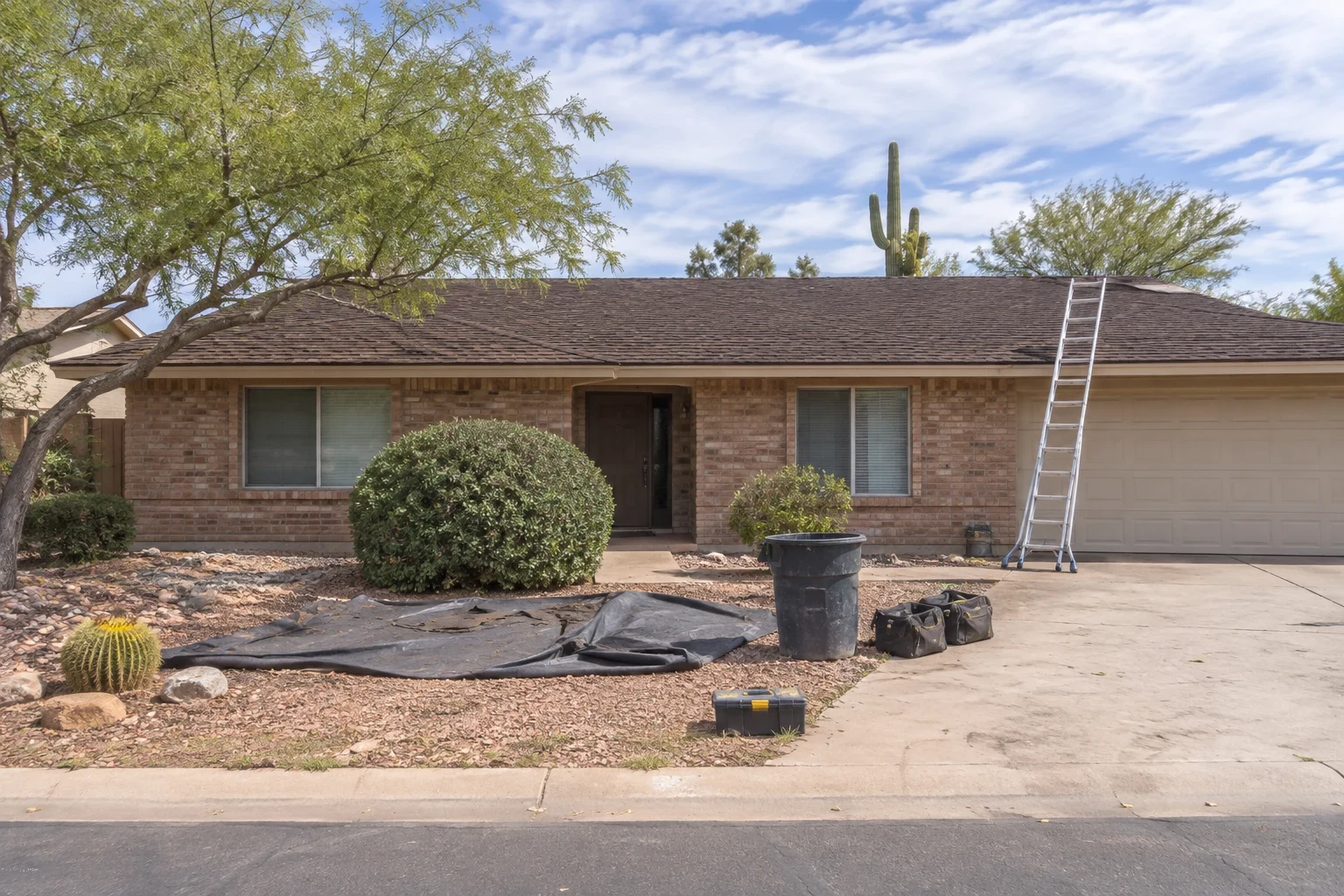
See the full scope on paper before you decide
Tell us your roof's age, material and where you are seeing leaks. We replace roofs in Carefree, Cave Creek and the surrounding area, and every job starts with a line-item estimate you can read before signing.